
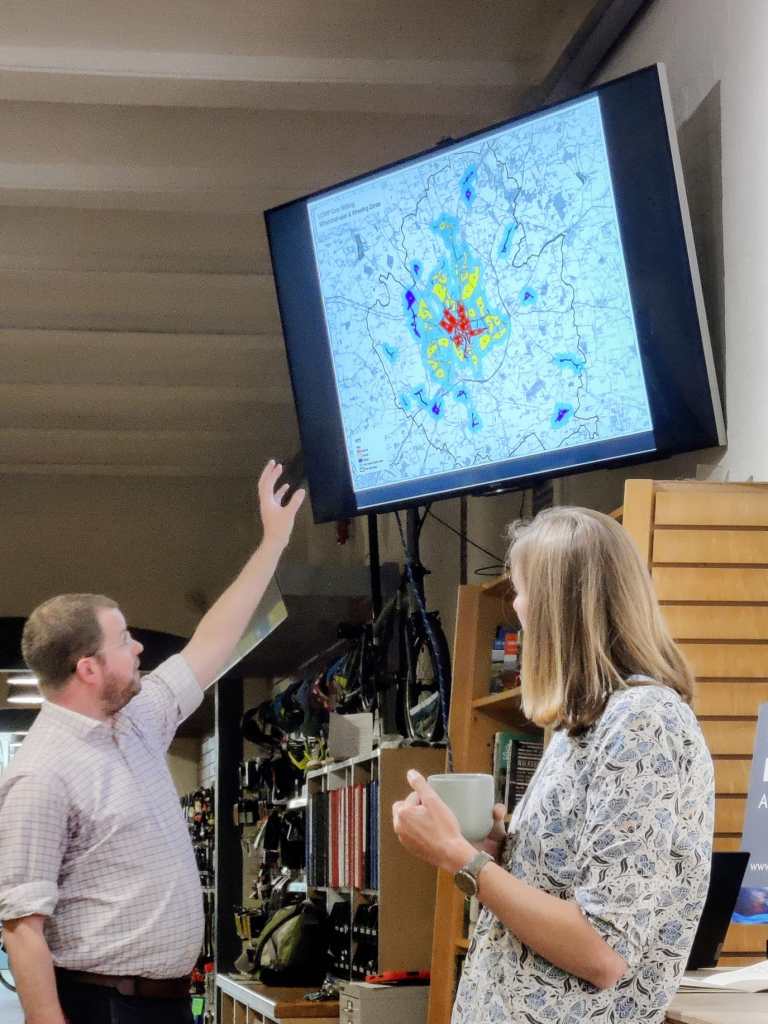
We were grateful for Councillor Kate Ravilious (Executive Member for Transport), accompanied by transport officers Tom Horner and Greg Morgan, for talking to members about highways maintenance and sustainable travel improvement. They explained the council approach to active travel improvements when resurfacing and junction improvements take place.
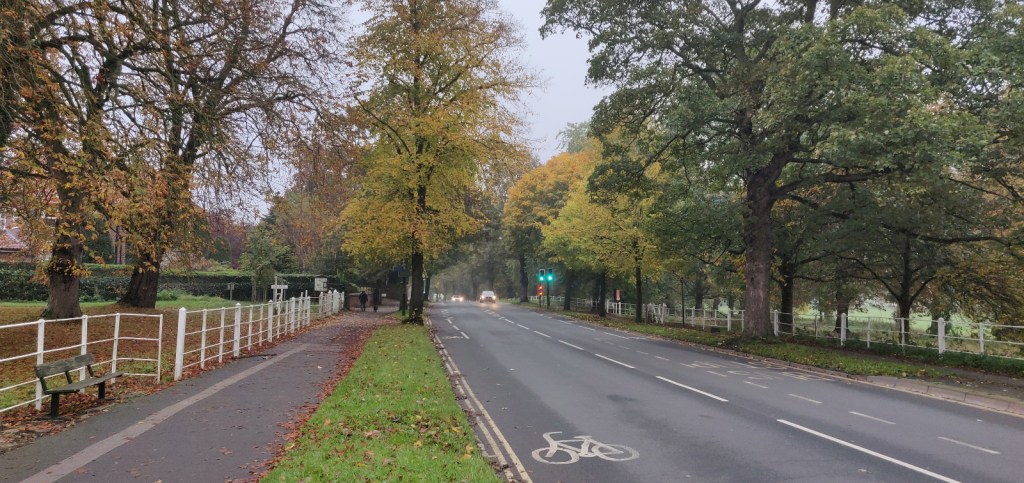
The broad aspiration is to move towards the modern standard (LTN1/20) with on-road cycle lanes at least 1.5m wide. Research from London suggested narrow cycle lanes can be worse than none in terms of close passing and collisions. However it was accepted that in places with regular traffic queues a lane of less than 1.5m is better than just removing it (eg Holgate Rd, Gillygate). Recent changes at Heworth roundabout and Huntington Road were discussed with overall feeling that the changes do help cyclists. At Huntington Road the council has replaced speed ‘cushions’ with a sinusoidal full width measure that is more effective at slowing larger vehicles while being much better for trikes and bikes with trailers. These may be used elsewhere instead of cushions in future.
Other good news that the whole pockmarked section of Albermarle Road IS to be resurfaced this year, being on the orbital cycle route, and criteria for highway repairs has been adjusted to favour more work on the key cycling network. For the current year £300k has been allocated for reactive and £300k for planned maintenance on cycle routes.
Active Travel England funding is being ‘reprofiled’ so that affordable schemes can be delivered:
- £1m Jubilee Terrace riverside path progressing to detailed design (work in 2026?)
- School Street at Clifton Green (Badger Hill school street now from Mayors Fund)
- Small scale works to be done with new toucan crossing on Shipton Road and safety projects on Acomb Rd
- City centre cycle parking awaiting appointment of member of staff to lead on it.
Integrated Transport Block
Match fund developer funding to create a safe cycle route to school in Copmanthorpe. Other schemes will support the LCWIP (Local Cycling, Walking Integrated Plan) and key routes eg Kingsway North/Crichton Ave roundabout
Funding from the Mayors fund includes:
- School Streets £350K (including Badger Hill)
- Copmanthorpe route to schools £200K
- Sustainable neighbourhood exemplar £500k
- Cycle hangars/lockers for residential and business locations £250k
- Speed reduction (eg Bishopthorpe 20mph) £400k
Barrier removal is progressing.
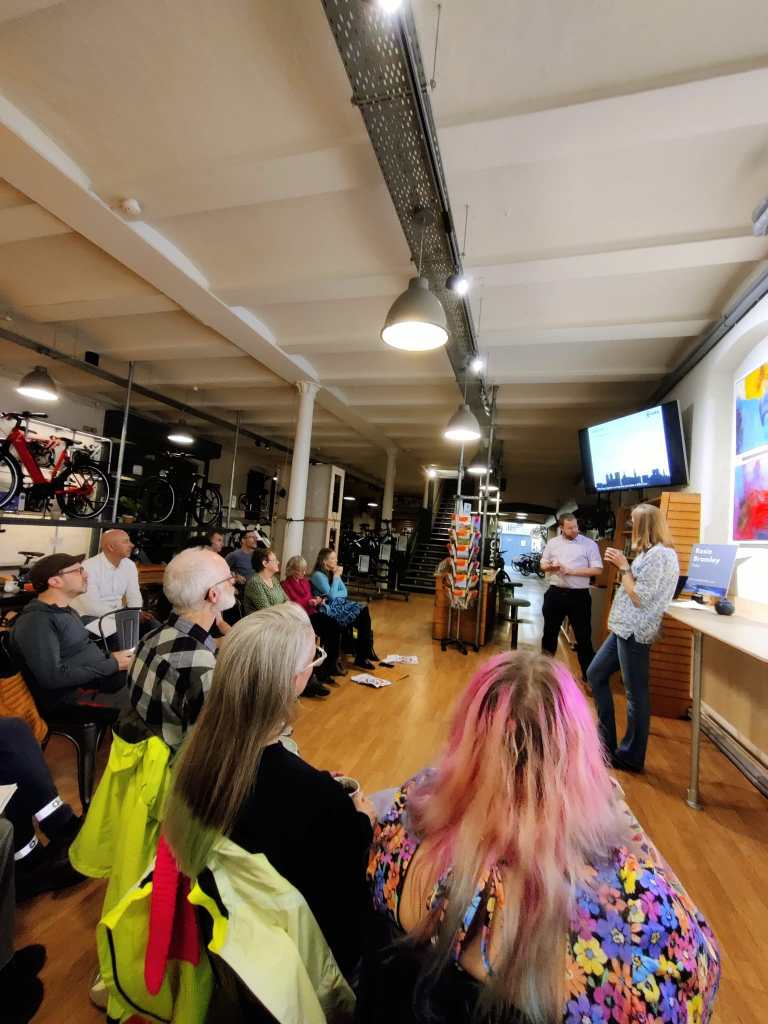
There were a number of questions from the floor, from which we learnt:
Possible one-way systems (with 2-way for bikes) in congested streets will be considered on a case by case basis eg to ease bus flow in South Bank.
The consultation on a city centre bus priority corridor will start later this month with a view to introducing a one-year trial in summer 2026 (after repairs to Lendal Bridge). This will benefit streets like Micklegate with more space for pavement cafes.
There was a discussion about an apparent decline in local cycling, and how wider 20mph limits might benefit cyclists. The response was that the data is difficult to interpret and not very reliable, since it it based on an annual snapshot and also reflects post-Covid changes in work patterns. Cycle counts on Ouse Bridge are planned before and after the completion of the proposed bus priority and access scheme, which aims to promote a more active travel friendly environment
The vision underlying the Transport Strategy is a focus on active travel and health including in areas of deprivation not just areas that make most demands. Watching closely what happens in Oxford Cambridge and Edinburgh for example.
Many cycle lanes have literally faded away. The dilemma is choosing whether to repaint narrow ones (which can’t easily be removed) or holding out longer for a redesign. In future the Council will try to get input from the Campaign as schemes come forward for work to be done.
With thanks to Andy D’Agorne for his comprehensive notes
 York Cycle Campaign
Leave a comment