

The Knavesmire on Easter Saturday April 2024. The sun is shining but there’s puddling on the paths and surface water alongside. I asked two girls next to upturned cycles: Do you need help? They turned and smiled. No, thanks. We’re just digging the mud out of our wheels.
Almost daily rain, sometimes heavy, has fallen in York between October 2023 and… well, thundery showers are forecast as I write this in early April 2024.
How has this affected local cyclists? Eighteen people, including, the author, responded to the survey.

Six people mentioned mud. The experience of ‘Sarah (Mum and commuter) – York’, mirrored that of the girls. She said: “…the mudguards get so filled with mud I can’t turn the wheels and have to try and clear it out with a stick.” ‘York cyclist for fifty years – with no car’ said s/he ‘cycled a bit less than normal’ using the comments box to explain “too much residual mud”.
Mud isn’t just messy or smelly, it’s a hazard. ‘Stewart’ said ‘I cycled, but on alternative routes’ and commented: “Clifton side of river path has not been cleaned and is often muddy and slippery after floods.”
The seven survey questions were revealing of cyclists’ experiences. But the main takeaway is that safety is key.
People move to York believing it is a cyclable city, where they and any dependants can make the journeys they need and want to on two or three wheels. Safety is also a factor in choosing the neighbourhood you live in, your mode of transport, and the routes you use. Puddles make brakes and rims slippery and so less effective. Potholes and other surface damage hidden under surface water can cause crashes sometimes with serious effects. There are long-term indirect effects too: spending the day in wet shoes and clothing can put people – including children – off cycling or keep people at home leading to reduced fitness and increased isolation.
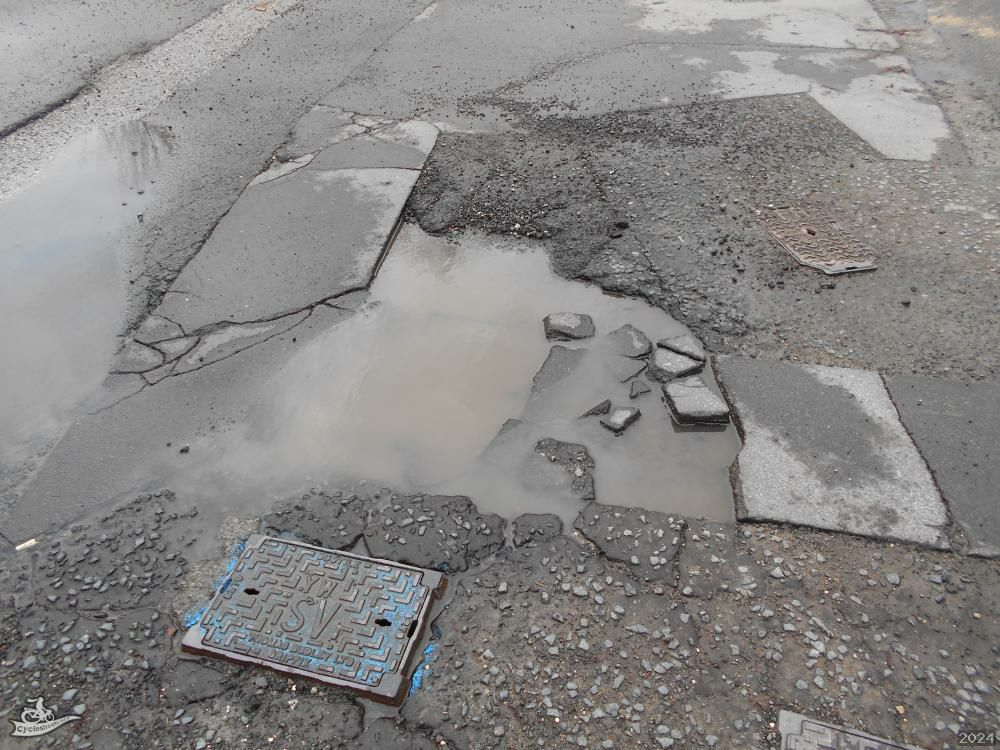
Road [Credit: Rebba]
If your route is under water you might feel pushed onto using roads. This means sharing with motor vehicles; using routes you don’t know; and encountering driving speeds and standards that make you feel unsafe. And there can be surface water on these too.
Many people who completed the survey commented on safety.
‘NEO’ chose the option ‘I did not make some journeys at all’ and said: “There are few safe alternative routes if the river path is unavailable. Leeman Road has always been risky and is currently an absolute mess due to roadworks and NRM work. Via Bootham is possible if access to Scarborough Bridge is available. Clifton Green junction is a horrible and dangerous junction for cyclists. Beyond town, eg. towards the university, the on road cycle provision is poor and unsafe.” Later in the survey, NEO chose: ‘I now cycle less. I have adapted by…’ and said: “When the river paths are flooded I have to modify journeys – some are not safe on road.”

[Credit: Rebba]
‘Cycling mum’ chose: ‘I now cycle less. I have adapted by…’. She explained: “Some trips made by car especially if cycling with my young son on busy roads would be necessary.”
Likewise ‘York cyclist for fifty years – with no car’ chose ‘I cycled, but on alternative routes’ and said: “It’s really dangerous to have to take a road route from Skeldergate bridge to Fulford when the river routes are under water – so we need a safe practical protected alternative. Similarly Bootham and Clifton – horribly unpleasant and dangerous on a December Saturday when I had to get to Rawcliffe to work and go on the road, including through massive puddles that cars wouldn’t give time and space for me to negotiate on bike.”
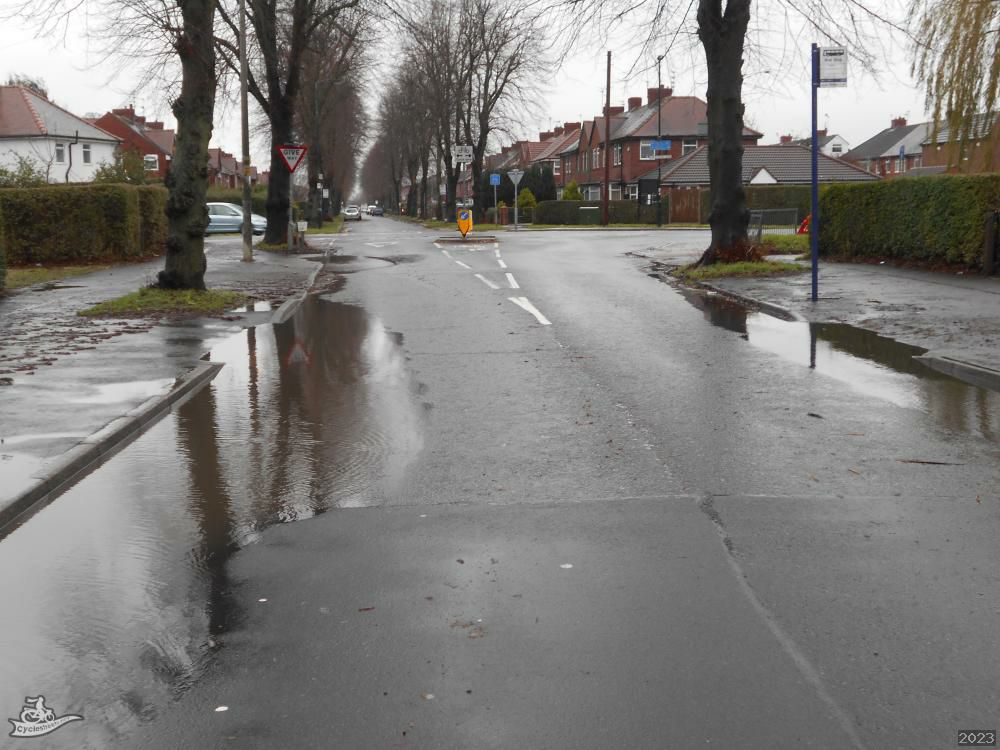
‘Anonymous’ chose ‘I cycled, but on alternative routes’ but commented: “Often the riverfront is blocked, so you need to cycle on dangerous roads that parallel it, much to driver’s annoyance.”
‘Sarah (Mum and commuter) – York’ chose ‘I did not make some journeys at all’ and said: “I could still cycle to work as I cycle on the road instead of the riverside paths but journeys I would normally make transporting my young child I am not willing to do on the road due to dangerous drivers and poor infrastructure for safe cycling.”
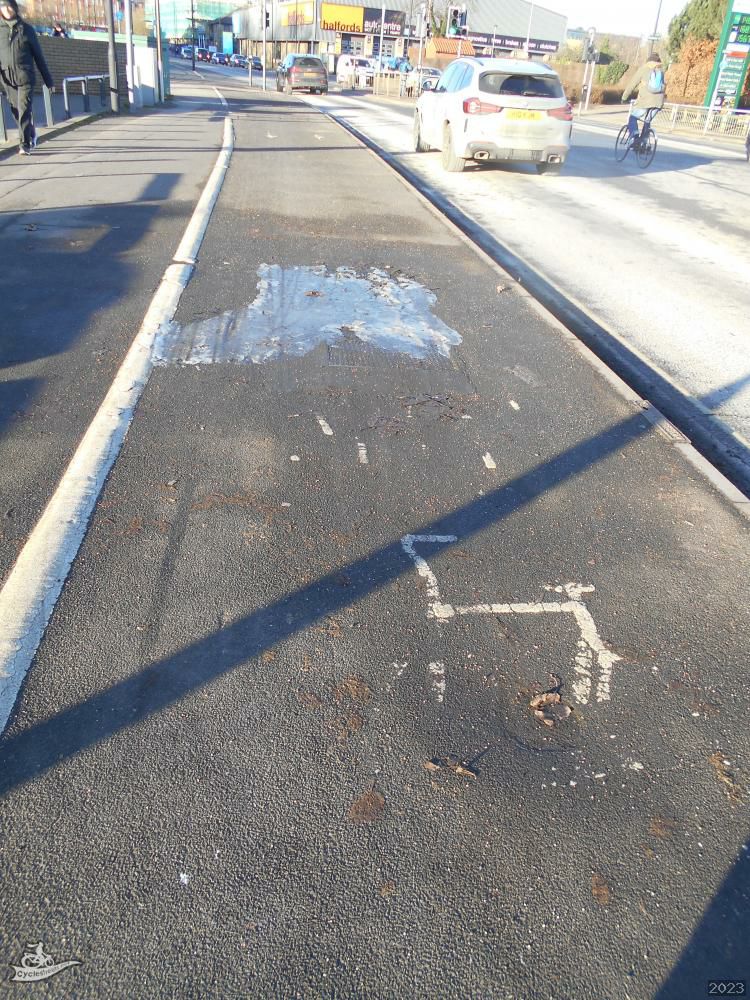
When temperatures fall, as they did in November and December 2023, surface water turns to ice. I found off-carriageway cycle lanes alongside Crichton Avenue and Wigginton Road, plus Foss Islands Way were glassy as they had not been gritted. After the first freeze, I spoke to three people each of whom had fallen when there was ice on their route. The consequences of coming off a cycle can be life limiting and life threatening even if it happens not on a carriageway.
Some respondents resorted to using a car when routes were under water, muddy, or icy. For example ‘Tom’ who said’ ‘I made some journeys by another means’ and explained this meant: “Some days by car due to longer, more dangerous cycle.”
Yet the 2011 and 2021 censuses show in some wards 50 per cent of households do not have access to a motor vehicle. ‘NEO’ chose ‘I now cycle less. I have adapted by…’ and said: “When the river paths are flooded I have to modify journeys – some are not safe on road. Also use the bus where I can. I don’t currently have a car – I consciously didn’t replace my last car, wanting to focus on more sustainable transport instead, but I’m seriously wondering if the decline in cycle provision in York makes this a sensible (or safe) choice.”
My experience was that without a car even managing the basics – food shopping, for example – was impossible at times.
With motor transport being a key contributor to climate change, people who can, do and could cycle, walk and wheel, need to be able to continue to travel actively even in inclement weather. The adage ‘There’s not such thing as bad weather only bad clothing’, simply doesn’t wash. York residents need safe routes at all times, and sustainable alternatives.

 York Cycle Campaign
Leave a comment