
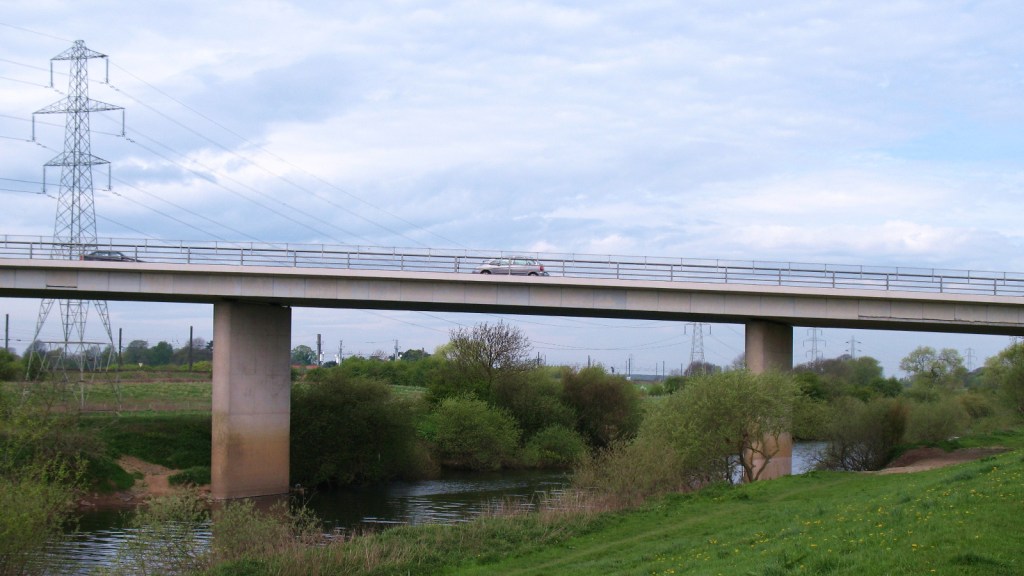
At the beginning of August we asked Is Cycling To School Too Dangerous?, and shared some initial findings of a survey the campaign conducted with Manor Church of England Academy. Below we share the full findings of the survey.
Introduction
Manor Church of England Academy is a coeducational secondary school for 11-16 year olds, and also one of the founding schools in the Hope Sentamu Learning Trust. Manor has a reputation for academic excellence and a proud history, having served the young people of York since 1812. Whilst Manor officially serves the North-West of York (with our catchment area covering Poppleton and Acomb), we have a large number of students that commute from all areas of the City, as well as its surrounding villages.
This report details the findings from a survey conducted at the request of a representative from the York Cycle Campaign about the safety concerns of the A1237 bridge between Clifton Moor and Poppleton. The primary objective was to gather insights from parents about any experiences or opinions that they and their children may have regarding their safety when travelling over the bridge to and from school. The findings from this survey highlights the safety concerns and opinions surrounding the bridge, as well as potential methods of improving the safety on this critical commuting route.
The survey targeted parents of students who reside in specific postcodes where travelling over the A1237 bridge to Manor C of E Academy is a necessity. Using SIMS, the school’s student database, we identified 143 families living within these postcodes, and invited them to participate in the survey. We sent out a letter to them via email, detailing the survey’s purpose and providing a link to the online questionnaire. Over a four-week period, 33 responses were collected.
The survey was created using Google Forms, and included questions designed to gain an understanding of student commuting patterns, use of safety equipment, perceived risks, and suggestions for improvements. The responses received have provided a comprehensive overview of the safety concerns and commuting experiences of the students and their families.
Survey Findings
“How does your child travel over the bridge to get to school?”
The survey revealed that over 60% of the respondents (20) indicated their children cycle to school over the bridge. Five responses indicated that their children walk, three responses mentioned travelling by car, and five responses provided other answers, involving a combination of walking, car, bike, and bus.
“If your child cycles to school, do they use any of the following protective equipment?”
Regarding the use of protective equipment for cyclists, all those who mentioned cycling in their answer to the previous question stated that their child wears at least one form of protective equipment. 21 out of 23 wear helmets,19 cyclists use bike lights, and five cyclists use reflective items.
“Has your child ever felt unsafe crossing the bridge to get to school?”
When asked if their children ever felt unsafe crossing the bridge to get to school, 25 respondents said yes, while five said no, and three responses were not applicable. Specific concerns included the narrow path and difficulty passing other pedestrians or cyclists, mentioned by 23 respondents. The speed and volume of traffic were highlighted by 17 respondents, and three mentioned weather conditions as a factor contributing to their feeling of insecurity.
“Have you ever witnessed, or heard of any incidents that have happened on the bridge whilst commuting to or from school?”
Regarding incidents on the bridge, 11 respondents indicated they had not witnessed or heard of any incidents. However, 21 respondents said they had, with 19 providing detailed explanations. These explanations predominantly involved people falling off their bikes into the road, with one respondent noting that they hear about such incidents on a monthly basis.
“Are there any specific times or weather conditions where you feel your child may be less safe travelling over the bridge?”
When asked about specific times or weather conditions that might make their children feel less safe, 26 respondents said yes, three said no, and four responses were not applicable. Rain was a concern for 13 respondents, wind for 12, and cold weather conditions including ice, snow, and frost for six respondents. Reduced visibility, including fog and darkness, was mentioned by seven respondents, and two mentioned rush hour as a concern.
“Have you ever altered your route or mode of transport in order to avoid travelling over the bridge to and from school?”
When asked if they had ever altered their route or mode of transport to avoid travelling over the bridge, 70% of respondents (23) said yes, while eight said no, and two responses were not applicable. All respondents who said yes indicated that they now travel by car. Safety concerns were discussed by 12 respondents, bad weather was mentioned by nine, and high winds by five. Darkness during winter months was referred to by two respondents. Among those who did not alter their route, three responses indicated that they have no other choice despite feeling the route is dangerous.
“What safety measures, if any, do you think could be implemented to improve safety on the bridge?”
Respondents provided several recommendations for enhancing safety on the A1237 bridge. Twenty-two respondents suggested creating a wider or separated path for cyclists and pedestrians. Fourteen respondents recommended adding curbs or barriers to separate the road from the pavement. Five respondents suggested constructing a completely separate bridge or route over the river and railway lines. Lowering the speed limit was suggested by four respondents. Improvements to path quality, including well-maintained greenery, gritted paths in winter, and better path and road surfaces, were also highlighted.
“Do you have any other concerns or comments about travelling over the bridge to get to school?”
Additional comments reiterated the previously mentioned safety concerns, including weather conditions, narrow paths, poor path quality, and the speed and volume of traffic. Two respondents also suggested improving lighting on the bridge, as there currently isn’t any. Four respondents mentioned the further danger imposed at the pedestrian and cycle crossing at the roundabout leading onto Great North Way, with all mentioning examples of cars not indicating into that junction, as well as approaching it at speed. One answer also pointed out the fact that children’s judgement of the speed of approaching vehicles does not fully mature until they are around 16 years old, thus highlighting an increased danger for our students in particular. Multiple respondents cited the bridge between Clifton Moor and Haxby as an example of a successful pedestrian and cycle route, particularly in reference to its use by students commuting to and from Joseph Rowntree School.
Conclusion
The survey results underscore the significant safety concerns faced by students commuting over the A1237 bridge. Implementing these suggested improvements can significantly contribute to creating a safer commuting environment for students attending Manor C of E Academy, as well as members of the general public.
If you would like to express your opinions on how safe it is on your school-run, or if you would like some transport research conducted at your school, get in touch with your York Cycle Campaign Ward Rep today.

 York Cycle Campaign
Leave a reply to bealeskhristan89 Cancel reply