
In September I enjoyed inter-rail travel to several towns and cities in France, Spain, Switzerland and Germany with a particular interest in observing their ‘joined up’ approaches to sustainable transport. What struck me in particular was how common and widely accepted it is to find 30kph (20mph) speed limits across whole urban areas, ebike hire schemes, and cycles allowed to use side streets contraflow while they are one way for motor traffic etc.
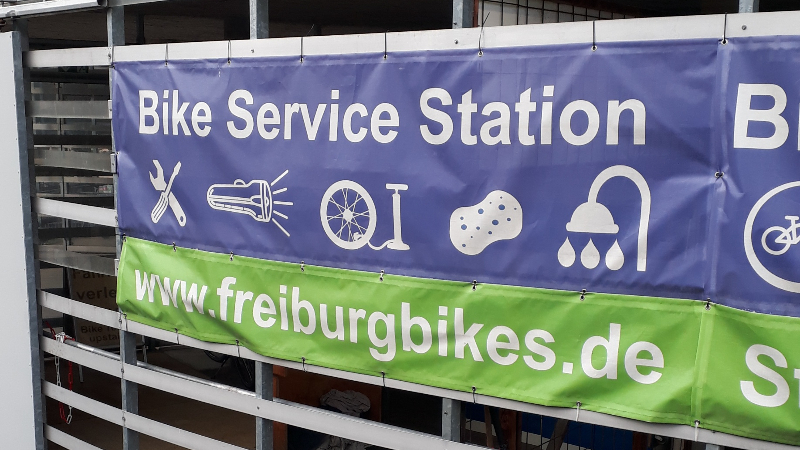
There were also features that are still not within UK highway design such as left/ right turning traffic having a green light but still required to give way to pedestrians on side road crossings (I have seen this apply in the US too). This effectively means greater permeability for pedestrians crossing side roads on signal controlled crossings while drivers also have less delay. Various different approaches are taken to highlight vehicle/pedestrian/cyclist conflict zones eg outside schools, but they do seem to be more generally respected by drivers than in the UK.

Contraflow cycling in urban areas
It was notable that all but the most narrow streets had a contraflow bike lane on the side where parking and loading was not allowed, so that cyclists were clearly visible to oncoming traffic and pedestrians.
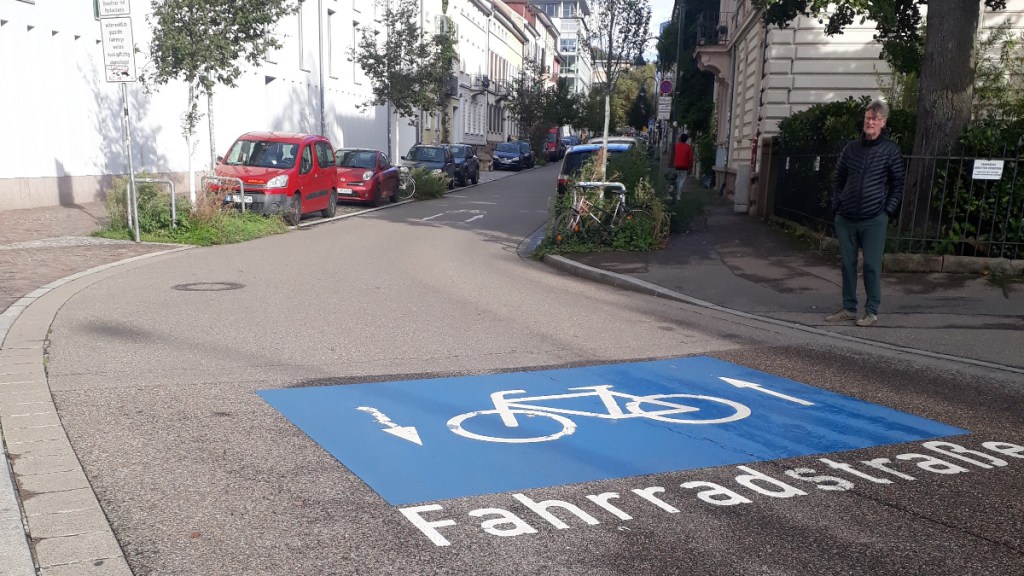
‘No entry except cycles’ is now allowed in the UK and doesn’t have to have a marked lane- the route through the Groves on Brownlow St is an example where this has been applied. Having such an arrangement for most streets does mean that pedestrians are more likely to check for bikes when crossing rather than assuming only one way traffic. Cycle movements also help to slow one way vehicle movements which do otherwise tend to increase in speed.

Where are the examples from?
So the examples that I saw ranged from large cities like Paris and Barcelona (major changes in the past decade) to places more like the scale of York – Freiburg, Dijon, and Lausanne. In the case of Dijon, one of our twin cities, it should be possible for YCC to find out more about the experiences of cycling in pedestrian areas, ebike hire and their free pedestrian area shuttle bus and where changes in legislation might be involved to lobby our local MP’s and the Transport minister Louise Haigh.
If you have specific questions or want to make know more or make use of photos that I have taken please get in touch.

 York Cycle Campaign
Leave a comment