
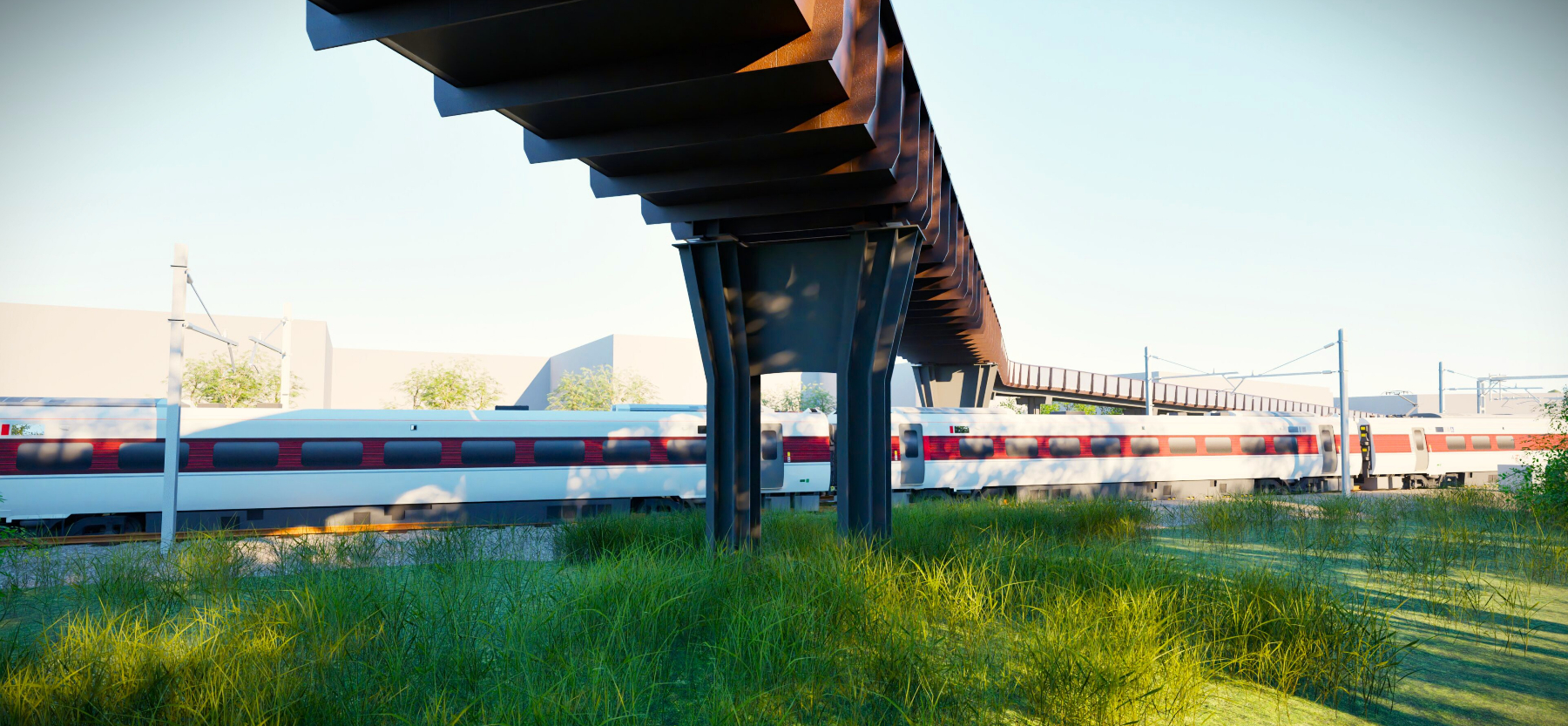
Last night’s (Thursday 7th July 2026) planning committee meeting’s decision regarding the new pedestrian and cycle bridge between Holgate and York Central has left the active travel community with a complex mix of emotions. While the approval marks a monumental step forward for step-free accessibility in the city, the final design compromises highlight a critical lesson for future infrastructure projects.
During the sweltering planning session, which took just under two and half hours to decide the outcome, York Cycle Campaign, alongside representatives from accessibility and disability rights forums, spoke in support of segregation of the bridge between pedestrian and cycle users. However, and probably surprisingly regarding an application for a new cycle bridge, the campaign were speaking regarding their formal objection of the proposals.
The core of the objection came down to the campaign’s concerns that the available width meant that segregation would not be safe or effective. These objections reiterated the points made in our written submission in June that the proposed deck spans of 4 meters does not meet the minimum widths given in national design standards (LTN 1/20 for cycling and DfT Inclusive Mobility 2021 for pedestrians)..
Squeezed Pedestrians
Shying away from the walls reduces the effective pedestrian path from 1.5 meters to a mere 1.25 meters, directly breaching the 1.8-meter minimum needed for two wheelchairs or prams to pass comfortably.
Substandard Cycle Lanes
The 2.5-meter cycle lane effectively shrinks to 2.0 meters due to the vertical wall buffer—an inadequate width for one-way cycle traffic for a flagship gateway into a major development let along two-way traffic, especially given the downhill gradients that will naturally accelerate riders.
The campaign warned that these substandard dimensions risk creating a de-facto shared space, pitching vulnerable pedestrians and cyclists into predictable conflict. A view echoed by the council’s own Highways department who’s written response stated:
This does not comply with national guidance and therefore cannot be supported. The available width on the bridge deck is not sufficient to adequately segregate pedestrians and cyclists (due to the proximity of the parapets). This will result in cyclists and pedestrians having to go over the line proposed for segregation. The bridge will therefore function as a shared space area, with the painted line providing a false sense of segregation.
Despite calls to mandate a wider deck or strict compliance adjustments, the committee ultimately voted nine in favour, with one abstention, to approve the 4-meter application, citing severe site constraints, electrified railway clearance lines, and the boundaries of the surrounding development plots.
A Mixed Verdict: Disappointment vs. Optimism
It is entirely valid to feel a sense of profound disappointment regarding this outcome. We had a golden, generational opportunity to build a flagship, future-proofed piece of active travel infrastructure . Instead, due to tight boundaries and compromises, York is getting a bridge that comes under the minimum allowable metrics .
However, we balance this frustration with genuine optimism that a step-free, fully accessible bridge will be delivered that is still safer and more accessible than alternative routes from Holgate to the City Centre.
For thousands of residents in Holgate and the wider western parts of the city , this new link will be an absolute game-changer. It replaces an inaccessible relic, offers a safe alternative to the hostile Holgate Road, and opens up seamless connection routes for wheelers, pushchairs, mobility scooters, and cyclists alike.
Network Rail’s design team has also agreed to work with officers on color-contrasting surface treatments, distinct lighting, and clear signage to make the soft segregation as safe and clear as possible. These are conversations that the Cycle Campaign are determined to have input on.
The Ultimate Lesson: Start Right Every Time
If there is one vital takeaway from this planning process, it is this: correct active travel standards must be baked into the outline planning applications and masterplans from the very beginning.
By the time this bridge layout reached the committee, the fundamental parameters—the 4-meter width limit and the red-line site boundaries—had already been locked in by the outline consent granted years prior. The committee’s hands were largely tied; rejecting the application on width grounds would have meant contradicting the established outline approval for York Central.
We cannot afford to let active travel infrastructure be treated as an afterthought or a flexible compromise to accommodate housing plots and operational assets. For all future developments in York, campaigners and planners must ensure that high-quality, fully compliant design standards are legally binding from the first stroke of the pen.
The York Central bridge will be a massive upgrade for our city’s connectivity. Let’s celebrate the massive win for accessibility, while vowing to fight for uncompromised space on the next project.
Leave a Reply